Rating: ★★★★★ | Now Showing in Theatres
Few filmmakers can turn a centuries-old literary classic into one of the year’s biggest cinematic events, but Christopher Nolan has never been interested in taking the easy route. With The Odyssey, he transforms Homer’s legendary tale into a breathtaking spectacle that feels both timeless and surprisingly relevant for modern audiences. The result is an ambitious historical fantasy that blends emotional storytelling, grand-scale action, and philosophical depth into one unforgettable experience.
Long before its release, The Odyssey was already surrounded by enormous expectations. Nolan’s reputation for crafting intelligent blockbusters, combined with an all-star cast and the challenge of adapting one of history’s most influential works, made this one of the most anticipated films in recent memory. Judging by the early reactions from audiences and critics alike, those expectations have not only been met—they’ve been exceeded.
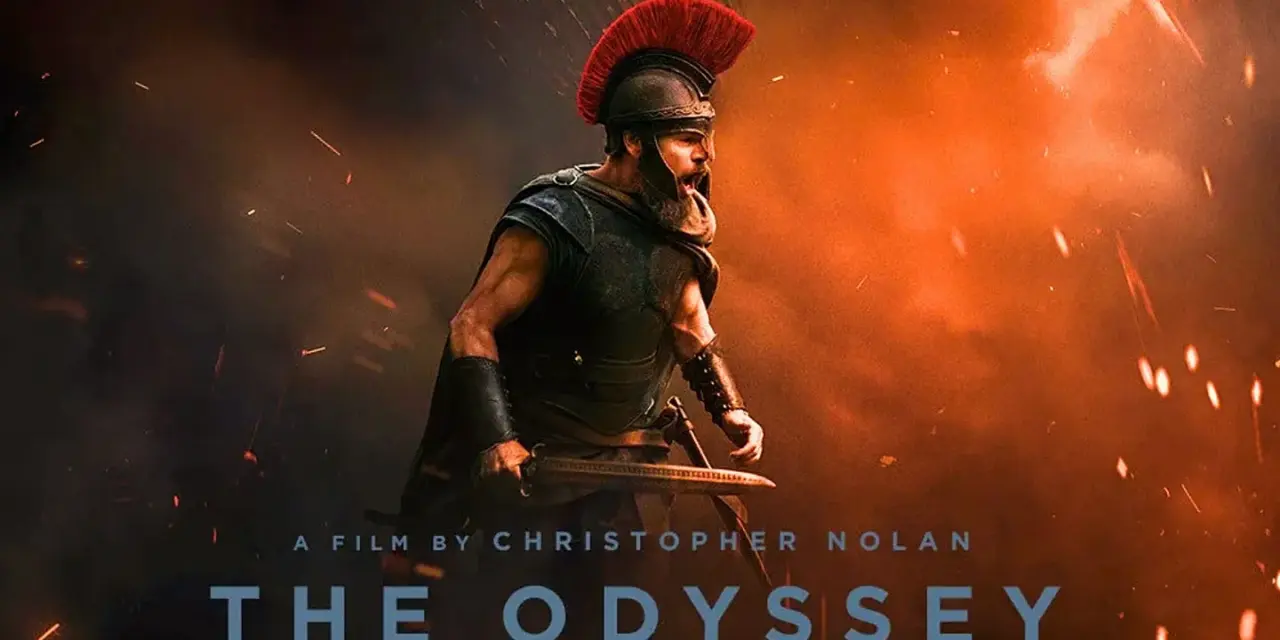
At the centre of the story is Matt Damon, who delivers a commanding performance as Odysseus, the King of Ithaca. Returning home after the devastating Trojan War should be a straightforward victory, yet fate has other plans. Instead of reuniting with his family, Odysseus finds himself trapped in a relentless journey filled with mythical creatures, dangerous gods, violent storms, and impossible decisions. What begins as a voyage across the sea slowly becomes a powerful exploration of endurance, sacrifice, leadership, and the desire to return to the people who matter most.
Damon portrays the legendary hero with remarkable balance. Rather than presenting Odysseus as an invincible warrior, he emphasises the character’s humanity. This version of the famous king is intelligent, determined, and courageous, but he is also exhausted, vulnerable, and deeply affected by the consequences of war. That emotional complexity makes his journey far more compelling than a simple adventure story.
The supporting cast is equally impressive. Zendaya, Tom Holland, Robert Pattinson, Anne Hathaway, Charlize Theron, and Lupita Nyong’o each bring their own presence to the screen, creating a cast that feels worthy of the epic source material. Rather than relying on celebrity appearances, Nolan gives each performer meaningful moments that help shape the emotional and dramatic weight of the story.
Among the standout performances, Tom Holland’s portrayal of Telemachus, the son of Odysseus, has attracted particular attention. Many reviewers have highlighted how much he has grown as an actor, praising the maturity and confidence he brings to the role. Telemachus is no longer simply waiting for his father’s return; he embarks on his own emotional journey, evolving from an uncertain young man into someone capable of carrying his family’s legacy. Holland’s performance adds another emotional layer that strengthens the film’s central themes of family, hope, and perseverance.
Visually, The Odyssey is exactly what audiences have come to expect from Christopher Nolan: massive in scale yet meticulously crafted. Every frame feels carefully composed, whether showcasing towering coastlines, turbulent oceans, ancient kingdoms, or mythical encounters. Instead of depending heavily on computer-generated imagery, Nolan once again leans into practical filmmaking techniques wherever possible. This approach gives the film an authenticity that makes its spectacular moments feel tangible rather than artificial.
The action sequences are thrilling without becoming overwhelming. Large-scale battles, dangerous sea voyages, and encounters with legendary creatures are presented with a sense of realism that grounds even the most fantastical moments. Rather than existing solely to impress visually, every major sequence pushes the narrative forward and reveals something meaningful about the characters.
Another element receiving widespread praise is the film’s emotional depth. While the story certainly delivers epic battles and breathtaking visuals, its true strength lies in its quieter moments. Themes of loyalty, resilience, forgiveness, identity, and the meaning of home resonate throughout the nearly three-hour runtime. Nolan never loses sight of the human relationships at the heart of the story, allowing audiences to become invested in the personal struggles behind the grand adventure.
The musical score also deserves recognition. It complements the film beautifully, shifting effortlessly between intimate emotional scenes and larger-than-life action. Combined with Nolan’s signature visual style and confident direction, the soundtrack helps elevate many of the film’s most memorable moments.
Critics around the world have responded enthusiastically. Numerous publications have praised Nolan’s willingness to tackle such an ambitious project while remaining faithful to the emotional spirit of Homer’s classic. Many reviewers have described the film as one of the strongest releases of the year, applauding its scale, craftsmanship, and emotional storytelling. Several have even suggested it could become one of Nolan’s defining achievements and a landmark entry in the modern blockbuster era.
The film’s reception has also sparked conversations about its influence on future large-scale filmmaking. Some critics believe The Odyssey demonstrates that audiences still have an appetite for intelligent, character-driven epics that prioritise storytelling alongside spectacle. Rather than relying solely on franchise formulas, Nolan delivers a film that feels original, ambitious, and artistically confident.
That said, the movie isn’t entirely without criticism. One recurring complaint involves the dialogue mix, an issue longtime Nolan viewers will likely recognise. At certain points, background music and environmental effects make individual lines difficult to hear. Since Nolan has consistently preferred capturing performances during production instead of extensively replacing dialogue afterwards, this remains a stylistic choice that continues to divide audiences.
Another point of discussion concerns the screenplay’s use of modern conversational language. While some viewers appreciate the accessibility this creates, others feel that contemporary dialogue occasionally clashes with the ancient setting. It’s a creative decision that may not satisfy everyone, though it rarely distracts from the film’s emotional impact or overall quality.
Despite these minor criticisms, the overwhelming response has been exceptionally positive. Early review aggregators show an outstanding approval rating from professional critics, reflecting the broad consensus that Nolan has created something truly remarkable. Audience reactions have been equally enthusiastic, with many praising the film’s emotional storytelling, unforgettable visuals, and immersive theatrical experience.
Ultimately, The Odyssey succeeds because it offers far more than stunning visuals and impressive action. It tells a deeply human story about perseverance in the face of impossible odds, the enduring power of hope, and the lengths people will go to for those they love. Christopher Nolan has managed to breathe new life into one of the oldest stories ever written without losing the timeless qualities that have kept it alive for thousands of years.
Whether you’re a longtime fan of Homer’s epic, a follower of Christopher Nolan’s filmography, or simply someone looking for an unforgettable cinematic experience, The Odyssey deserves a place at the top of your watchlist. It stands as one of the year’s most ambitious releases and reminds audiences why certain stories continue to inspire generation after generation.
Final Verdict: 5/5 Stars
The Odyssey is a visually spectacular, emotionally rich, and expertly crafted epic that proves Christopher Nolan remains one of modern cinema’s most daring filmmakers. With outstanding performances, breathtaking production values, and a story that balances myth with genuine human emotion, this is the kind of film that was made to be experienced on the biggest screen possible.